Developing Social Skills in the Classroom

Social skills are essential. In a classroom, there are constant interactions; this makes teaching social skills a core part of a classroom. In an early childhood classroom, students have not had as many experiences with social interactions, so they may need extra guidance and support.

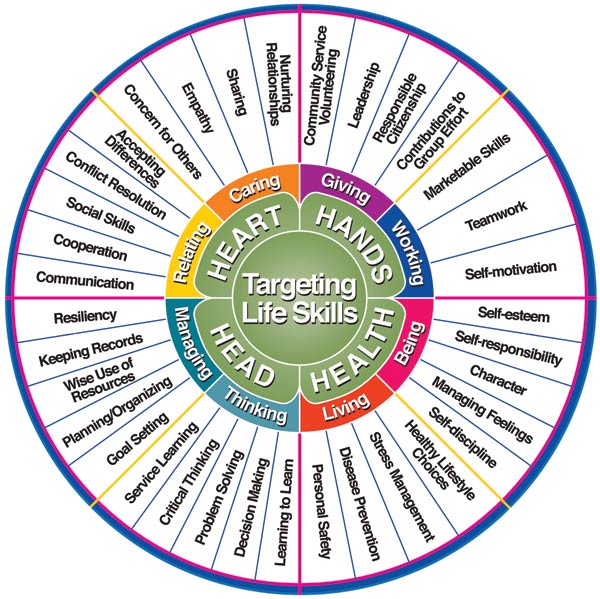
There are many aspects of social skills that need to be considered. 4-H is an organization that I grew up being involved in, and it continues to be a large part of my life as I continue to be a volunteer for my local program. The image below outlines life skills targeted by 4-H, and I feel as if they translate to social skills to be included in the classroom.

https://lincolnextension.nmsu.edu/documents/targetinglifeskills.jpg

These skills are all ones that can be taught in the classroom and be transferred outside of the classroom. Each one of these skills are important for students to learn and master. However, there are specific skills that will be the focus of my early childhood classroom.

One sector that will be significant in my classroom is the heart section that includes caring and relating. The individual skills from this part that I want to explicitly teach in my classroom are social skills, communication, conflict resolution, sharing, and nurturing relationships. Self responsibility, self discipline, self esteem, and managing feelings are all skills I want to teach explicitly from the health sector of this model. I believe these skills lay a foundation for students’ social interactions.

Along with these social skills that I will explicitly teach, there are skills that I want to be an overall focus in my classroom. These include accepting differences, goal setting, responsible citizenship, teamwork, and leadership. I want to model and utilize these skills to create a positive classroom community.

The visual above was introduced to me in one of my courses by a professor. This is a resource that I will use to guide instruction of social skills in my classroom. It is something that really resonated with me, as I have always been involved in 4-H, and the skills relate to the classroom.

My Classroom Interventions

Having many tools to run and manage and classroom is essential. There are many strategies and interventions that are available for teachers to use. This post is highlighting the main interventions I am wanting to apply in my classroom.

The biggest intervention I want to apply for myself is showing passion. Students know when a teacher is really committed to their learning, and I want to show that commitment to my students. My goal is to really enjoy teaching in my classroom and spread positivity. I want to stay open minded through my career and really find things that inspire me, so I can in turn, inspire my students. I want to use this passion to set and communicate high standards for my classroom. Finally, I want to use this passion to be a reflective practitioner and really look at the methods I am using, how that is impacting my students, and what I can improve.

Classroom management will be a major intervention in my classroom to set the structure and expectations for my students. It is essential to have a classroom that sets students up for success, and effective classroom management helps accomplish this. I will do this by creating relationships with my students, making content relevant, giving students responsibilities and make them a part of their own learning, set up an environment for success, and create a safe, positive classroom. One of my focuses will be managing routines and procedures, as having these structured will help maximize instructional times. Clarity will be a main point in my classroom, so students always know what to do, so confusion will not lead to misbehavior.

Giving students opportunities will be a key part of my classroom. I really want to emerge students in their own learning. I was to give them many opportunities every day for interactions with their peers and myself, as well as giving them opportunities to respond. I want each student to feel valued and be engaged in their personal learning process.

I also want to be sure to celebrate my students. I will utilize this through verbal praise, giving students notes, and sending notes home to parents. This can really help make students feel valued. I want to use this intervention to help all students gain positive recognition.

Another intervention I want to implement into my classroom is having a teacher’s assistant. This is a great opportunity to provide students with interactions. It also gives them a chance to work on verbal communication in front of the class. This is something I think is essential for early childhood. It is another method that really ensures students are involved in the classroom. I want to use this to further strengthen the community I will build in my classroom.

Mutual respect is going to be key in my classroom. This will be an extremely high expectation for my classroom. I want students to have respect for me and their peers. I will create a foundation for this intervention by modeling this for my students. Not only do I want them to respect me and each other, but I want them to know I also respect them.

Greeting students at the door is another strategy that I am going to put into action in my classroom. The tone of the classroom can be decided as soon as students walk in the door. I want to intentionally work to make sure that as each student steps into my classroom starts with a positive interaction.

One intervention I also plan to implement is the 2×10 strategy. This is something I just learned about, and I think the concept is essential. It is taking two minutes for ten days to interact with a student showing undesired behaviors. I will use this to be intentional to create positive interactions with my students throughout the day.

I want to display student work as well. It is important that students are recognized for the hard work they are doing. This can encourage them to do their best work, and an intervention that can make them feel proud of what they are doing and others can recognize them as well.

Class-Wide Function-Related Intervention Team (CW-FIT) is a whole class intervention that I will use. The components of this are teaching, peer and self monitoring, extinction, and reward. This is laid out in a way that I really want to focus on in my classroom. It is essential to teach students expected behaviors. To me, it is important that students are monitoring themselves, as this can lead to self regulation.

The above list are intervention strategies that I want to be a focus of my classroom. My goal is to use these to create a safe, positive classroom environment where students are engaged in their learning. As my career starts, I will be able to refine how I use these strategies and add to the tools I have to help students in ways that are best for them.

Bronfenbrenner’s Ecological Systems Theory in the Classroom

Bronfenbrenner, an American psychologist, created the Ecological Systems Theory to show how an individual, specifically a child, is impacted by the environment. He noted the importance of looking at each level to help better understand development. This theory starts with the child’s home environment and moves all the way out to factors due to time. This model shows how each level interacts and influences the others.

https://www.psychologynoteshq.com/wp-content/uploads/2013/09/bronfenbrenner1-550×492.jpg

The different levels of the model include the microsystem, mesosystem, exosystem, macrosystem, and chronosystem. In the classroom, we must understand each of these levels and how they impact our students. The microsystem is closest to the child and includes home life, school life, and the personal relationships with those individuals from each aspect. The mesosystem is how the levels work together. An example of this is the connection of school to home. The exosystem reaches into things like the parent’s work place, extended family, and neighborhoods. Culture, politics, and economics fall into the level that is furthest away from the child. Finally, the chronosystem adds time to the model which considers change and constancy.

Bronfenbrenner’s theory leads right into the classroom. This theory was designed to look at how everything in a child’s life and environment acts on the growth and development of the child. As teachers we must understand which parts we play a role in and how each level is impacting the children in our classes. We need to be aware of how we are directly playing a part in the lives of our students as well as how we indirectly impact the levels in this model.

Examining these levels can also help us understand behaviors. Behavior is a way of communication and using this model can help us better understand student behaviors and what they need. This model can also be used to look at the growth and development of students.

This model will play a key role in my classroom. A large focus in early childhood is growth and development, and this theory by Bronfenbrenner goes in depth on what influences growth and development for children. It is something I can use to assess the growth and development of my students. This really provides a good framework to really be able to consider all environmental factors.

A Highly Engaged Classroom

A highly engaged classroom is essential. It is important for all students to be active participants in their learning, and that can only happen if all students are engaged. As teachers, we have to set students up for success. Engagement helps make this possible.

Engagement starts with pedagogical strategies. Having a strong pedagogy can set up the class to be highly engaging. The video over effective pedagogy brings up two points that I think are key for engagement: planning and creating a positive climate. Planning is crucial for many things in the classroom but can really contribute to engagement. To do this, planning should set expectations and learning should be centered around how students learn. Behaviors and actions in the classroom should be set in planning, and these expectations should be communicated with students. If students know what expectations to meet, then more energy and focus can be placed on engagement and learning with less distractions arising. This learning needs to be centered around how the students in the classroom learn. If content is presented in ways that promote learning for all students, then they are more likely to be engaged. A positive climate also is included in pedagogy. A positive climate naturally builds more interest. This can encourage students to participate, even if they are unsure. Planning and creating a positive climate are the foundation for high engagement.

The next piece of engagement takes ideas from the effective instruction and management video. Being effective as an instructor promotes engagement as well. Using explicit language and instruction is the base of effective instruction and management. This ensures that there is no confusion for students. If students are clear on what they are to be doing, then there will be less time for them to be confused and off task. Another important part of this is modeling behavior for students. They are likely to feed off of the teacher’s attitude and energy. One way to get students excited is to be excited ourselves as teachers. It is also imperative for high engagement that learning is kept enjoyable. Students have to be having fun and enjoy the learning to stay engaged in the classroom. Effectiveness goes right into engagement.

Another vitally important part of a high engagement classroom is knowing how to reach every learner. This idea comes from the video on high needs students. However, it is important that this is a goal for the whole classroom, not just high needs students. To keep students engaged, you must know strategies that will accomplish that goal.

Engaging resistant learners was another topic covered in our course that pertains to all learners. Out of the seventeen strategies celebrating students, caring, smiling, adding value to learning, and showing passion are strategies that stuck out to me to help guide engagement. I believe all of these things are particularly important, because they are specific things teachers can be mindful to do to help create engagement.

Article “The Key to Classroom Management” by Marzano: Teachers’ actions have a large impact. This follows up on the previous paragraph. Those mentioned strategies are all things a teacher can personally do to impact engagement. Teacher-student relationships provide an essential foundation. There must be a relationship to build engagement on for it to be successful. A connection with students will help on the journey to a highly engaged classroom.

In my classroom, creating a highly engaged classroom will be of great value. The needs of each individual student and the class as a whole will be taken into consideration. I will use all of these needs to plan my classroom. My goal is to use my own high impact in the classroom and plan lessons that are enjoyable for students. I plan to do so my being explicit, modeling my expectations, creating relationships with my students, and getting them excited by showing passion. A highly engaged classroom leads to deeper learning.

Effective Management and Instruction

Student + Teacher Behaviors = Outcome

How teachers manage and instruct their classroom plays an essential role in outcomes and success. Everything the teacher does plays into the classroom environment. As educators, this is something we must be aware of in our classroom.

It is essential to set up success, allow success, and give students the credit for success. Teachers should give students the tools they need to be successful, create an environment that allows them to have success, and then praise students and give them the credit for their success.

All teacher behaviors should support students. Teacher behaviors that accomplish this include explicit curriculum, modeling, engagement, goal setting, consistent routines, guided practice, proximity, spaced authentic practice, formative assessment, high rates of positive feedback, physical arrangement, and questions. These all factor into effective management and instruction.

Effective teaching has three components: instruction, environment, and relationships. Instruction in the classroom has the essential need to be effective. This is needed so students can gain the knowledge they need. Ways to ensure effective instruction are make it teacher facilitated, be direct and explicit, and include the students as active participants. The environment that is created also adds to the effectiveness of a classroom. The environment must be arranged to allow for teacher movement and provide consistency for students in routines and procedures. Relationships are an enormous part of an effective classroom. Teachers must communicate often, have a genuine interest in students, and be encouraging. These components come together to create the most effective and successful classroom.

http://www.whitehouse51.com/pic/patriciarich56.files.wordpress.com/2014/04/design-your-classroom-layoutwood-designs-blog-42jfyqgo.jpg

All of the practices previously discussed really create a positive learning climate for students, but there are certain strategies that I want to emphasize in my classroom. How I want to highlight these in my future classroom follows:

Modeling is very relevant in an early childhood classroom. To me, it is important that I am modeling behavior and showing the students what I expect from them. I will also be conscious about my proximity in the classroom. I wish to be present and near in my classroom and use proximity to help guide my students. The environment is vital to effective management and instruction. To me, this sets the tone for the whole classroom. My classroom will be consistent so students have a clear understanding of expectation. It is also one of my goals to create a safe, flowing environment. Positive feedback will be a behavior of mine I will use to feed into this environment by acknowledging students who are meeting expectations and recognize their successes. Engagement will also be a significant part of my classroom. I want to ensure all students are on task, actively participating, and that learning is enjoyable.

My goal is to create a classroom that uses these components to be effective in management and instruction. This will come through being a reflective practitioner. I will accomplish this by studying and reflecting on the strategies and methods I use in my classroom.

Classroom Expectations and Rules: A Classroom Best Practice

Classroom expectations are behaviors and attitudes that are valued within the classroom. Rules set specific criteria that show how students can meet the expectations. These rules should be observable, measurable, positively stated, understandable, and always applicable. Classroom expectations and rules set the foundation for classroom management.

Classroom expectations and rules set the tone in a classroom, which makes this best practice essential. The expectations that are held for the students can help determine success in the classroom. If students are held to higher standards, they will work to achieve them. It is very important to set expectations and rules at the very beginning of the year. These expectations and rules should also be clear, so there is no confusion on what behavior is appropriate in the classroom.

In the management of my class, classroom expectations and rules will play a large role. It is important to involve students in creating these rules. One of the first things I will do with my new class every year is make a set of rules together. To start this, I will explain my classroom expectations to the students then have them give their input on what rules our classroom should have. I will put the rules on an anchor chart and have the students sign their names on the bottom of the paper. This will be something in my classroom I can refer back to and use to hold students accountable.

The rules in my classroom will be utilized in a positive way. I will use it to reinforce expected behaviors by giving positive feedback to those students following the rules. This will encourage all students to meet expectations. If students are struggling with a certain rule or expectation, I will explicitly review that specific point with the class as a whole.

To me, the most important thing to do is to create a relationship with my students. I will help do this by including them in our classroom rules. In my classroom, I will create a positive, personal relationship with each student by putting forth the effort to get to know them. This will help strengthen my classroom community and encourage students to want to meet my expectations.

Setting classroom expectations and rules early on is necessary for successful classroom management. It is important to engage students by including them in the process, as well as creating relationships with them. This lays the groundwork for a close-knit classroom community, which is the ultimate goal for my classroom.

What Guides My Behavior Plan?

There are many principles and strategies that are available to be utilized to guide behavior plans. Each one has different aspects and offers unique benefits. I believe each teacher’s behavior plan should be individualized, as each teacher has their own expectations and each classroom their own needs.

One thing I most recently learned that stood out to me was the statement that we teach students if they do not know something, so why don’t we teach behavior? Teaching behavior is going to be the main guideline of my behavior plan.

In my future classroom, there are different characteristics that I would pull from the Positive Behavior Interventions and Support (PBIS) and Conscious Discipline, as well as concepts taken from aspects of my teacher preparation courses.

PBIS has proven to be an effective management strategy within schools. The three tiered approach to provide emotional, social, and behavior support is my major take away from this framework. This system will be the core of the behavior plan in my classroom. To me, it is essential to support students in all of these ways. PBIS also really focuses on staying positive. I will use strategies to ensure that my classroom has a positive climate for all learners.

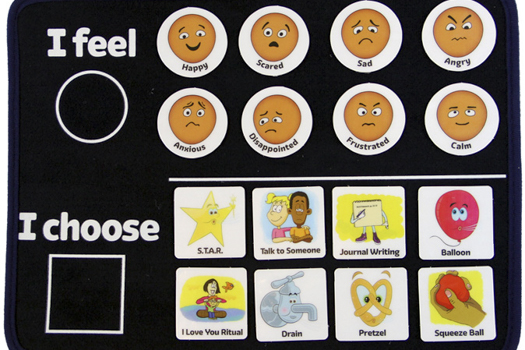
I also am going to pull aspects from conscious discipline into my classroom management plan. This is something that really targets the early childhood classroom. The seven skills of discipline: anger management, helpfulness, assertiveness, impulse control, cooperation, empathy, and problem solving are what I will incorporate. Below is a specific example of conscious discipline that I will use in my classroom. To me, this is essential, because it helps teach students to recognize how they are feeling and gives them options on how to work through their emotions.

https://consciousdiscipline.com/wp-content/uploads/2017/05/Shuberts_choose-self-control01.jpg

There are also ideas from Colvin’s text Defusing Disruptive Behavior in the Classroom that will help guide my behavior management plan. For correction procedures, my goal is to redirect behavior. This point was brought up, and it can be more helpful, especially for future behaviors, to redirect undesired behavior to meet expectations rather than just point out the negative behavior. My attention and personal reactions are two things that I will be extremely attentive to in the classroom. Being aware of how these two aspects impact students will help guide my behavior plan as well. The last aspect of this is really being organized and keeping students informed. I must be sure all students understand my expectations, and I must teach them what I expect them to do in the classroom. It is also important that all direction in the classroom is clear and carefully planned.

Classroom management can be a difficult task, however, there are many available resources and strategies that can guide a behavior plan. In my classroom, my behavior plan will be based on teaching expected behaviors in a positive classroom environment. I will focus on using the 3 tiered model of behavior, emotional, and social support from PBIS. I will also use methods of conscious discipline to help students learn to self regulate behavior. I will redirect behavior, know the impact of my attention and personal reactions, be clear and planned, and help students learn my expectations of their behavior.

Seven Key Behavioral Principles: Geoff Colvin

Starting off Defusing Disruptive Behavior in the Classroom, Geoff Colvin highlights “..seven key behavioral principles that underlie the strategies need to be clearly understood.” These seven principles include: goals of correction procedures, the role of teacher attention in correction procedures, the nature of behavioral intensity, escalation, and defusion, the behavioral chains, the role of behavioral extinction and extinction bursts, the power of personal reactions, and establishing a fluent response. Each of these principles will play a key role for management within my classroom.

Goals of Correction Procedures The main goals of this principle are to interrupt problem behavior to engage students in expected behavior, ensure appropriate behavior in the future, and avoid escalating the situation. This first principle sets the framework for managing the classroom and set redirection of behavior as a target in the classroom. My aim is to learn how to utilize correction procedures efficiently to have the ability to interrupt problem behaviors and ensure students will demonstrate expected behavior in the future.

The Role of Teacher Attention in Correction Procedures Recognizing that all students need teacher attention and that problem behavior is a sure way to get teacher attention is key to understanding and utilizing this principle. Teacher attention can be a main cause behind problem behaviors. In my classroom, I will learn to the extent of teacher attention each student needs. My goal is for no student to feel the need to misbehave to gain my attention. I want to direct my attention in the classroom in ways that will reinforce expected behavior while reducing problem behavior.

The Natures of Behavioral Intensity, Escalation, and Defusion This principle focuses on the seriousness of behavior and how the behavior progresses, which can inform teachers how the student is making progress. My realization from this principle is to recognize the intensity of behaviors and be aware of the direction they are heading. I will use this knowledge to be conscious of behaviors that are happening in my classroom and monitor student progress with behavior. Even if it takes time for a student to reach a target behavior, I will be able to see their progress of defusion and improvements can be made over time.

https://melindacarlson.weebly.com/uploads/9/8/0/5/9805016/1350254072.png

Nature of Behavioral Chains Behavioral chains look at successive behaviors and how each action impacts student behavior. This principle really made me aware of how my actions as a teacher can influence the behavioral actions of my students. In my classroom, I will be aware of how the choices I make influence my students and the decisions they make related to behavior. I also came away with the realization that interventions are more effective early in the beginning of the change. I will use this in my classroom to be sure to intervene with problem behavior efficiently.

The Role of Behavioral Extinction and Extinction Bursts It is important to understand the process of extinction and that this can sometimes cause extinction bursts. Once reinforcers of a particular behavior are removed, students may exhibit extinction bursts, more serious behaviors, before target behavior is reached. This principle will also be of importance in my classroom. I will use this to realize that access to preferred activities may reinforce negative classroom behavior. Knowing this principle can aid in being able to remove these reinforces. It also made me aware that behavior may get more serious after the reinforcers are removed, however, I will manage these bursts effectively to reach expected behaviors.

The Power of Personal Reactions This principle focuses on reaction of teachers. If teachers react personally to behavior, then it can escalate student behavior. It is important to use logic and not react personally to problem behaviors. In my classroom, I will be sure to not take student behavior personally. In early childhood, not every student has learned to self regulate. This is something I must be mindful of in my classroom and be sure to use best-practice responses and not react personally.

Establishing Fluent Responses The most challenging response to problem behavior is to be fluent in the very first response to the problem behavior. It is essential to respond in a planned, automatic way with an effective response. This principle is one that I believe will be improved with experience in the classroom. In my classroom, I know the first response to problem behavior is crucial and I will adapt to using practices that prove to be effective.

My big take away from these seven behavioral principles was redirection of behavior. One of the most powerful actions is having the ability to interrupt an undesired behavior and redirect students to the expected behavior. My goals involving classroom management will be centered around redirecting behavior to achieve clear expectations of behavior that will be set. Management in my classroom will benefit from using these seven behavioral principles set forth by Colvin.